


『Inlet Flow Meter: Regulating Water Intake Volume in Commercial Appliances and Chillers』Related information(v cone flow meter|rotary gas meter|gallon meter|gear meter|metal tube rotameter|glass tube rotameter|nutating disk meter|transit time ultrasonic flow meter|wedge flow meter|pd meters|hydraulic flow meter|ultrasonic water flow meter|water flow meter|air flow meter|magnetic water flow meter|oxygen flow meter|gas flow meter|argon flow meter|air velocity meter|gasoline flow meter|fuel flow meter|ultrasonic water meter|digital water meter|nitrogen flow meter|solid flow meter|Oxygen tank flow meter|digital water flow meter|diesel fuel flow meter|steam flow meter|02 flow meter|compressed air flow meter|oil flow meter|liquid flow meter)

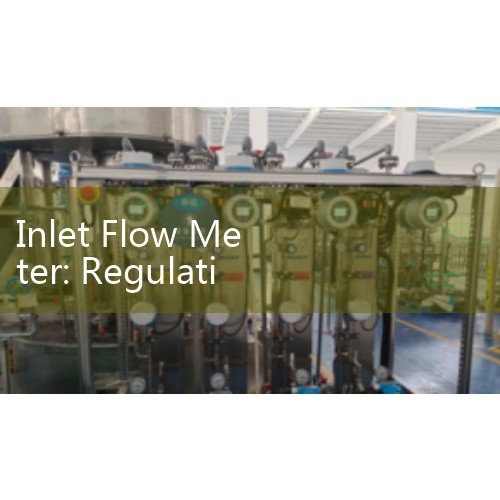
Inlet Flow Meter: Regulating Water Intake Volume in Commercial Appliances and Chillers
Quick Answer
An inlet flow meter measures water volume and real time flow rate on a chiller or commercial appliance feed line. For most DN15 to DN80 water intake lines, Silver Instruments recommends an electromagnetic flow meter because it has no moving parts and works with conductive water. A pulse or 4-20 mA output lets the PLC stop the fill at the exact batch target and protect the chiller from low flow faults.
Why Inlet Water Measurement Is Not Just a Switch Job
Many chiller panels rely on a flow switch or a pressure switch. Those devices give a yes or no signal. They do not tell you how much water entered the system. In practice, a cooling tower makeup line can slowly lose flow because of scale, a clogged strainer, or a failing bypass valve. The chiller keeps running until the low flow switch trips. At that point the damage may already be done.
We have seen this on customer sites many times. A chiller maintenance contractor in Vietnam replaced three float switches on a 120 kW air cooled chiller before installing an inlet flow meter. The real problem was a partially blocked Y strainer. Flow was down to 40 percent of design. The float switch did not catch it. The inlet flow meter did.
Where Commercial Appliances Need Fast Batch Measurement
Ice machines, combi ovens, dishwashers, and water cooled condensing units open a solenoid valve for short cycles. Some cycles last only 8 to 30 seconds. Water supply pressure can move from 2 bar to 6 bar in a building depending on other loads. So the fill volume will vary if the control only looks at time. An inlet flow meter with a fast pulse output solves this. The board counts pulses and closes the valve when the target volume is reached. The result is consistent water intake even when supply pressure changes.
For small lines below 1 L/min, a compact electromagnetic meter with DN8 or DN10 connections is a better choice than a turbine meter. Most turbine meters need a higher velocity to give a stable pulse. Silver Instruments supplies low flow electromagnetic meters with a calibration report down to 0.05 L/min for OEM builders.
Meter Types for Water Intake Lines
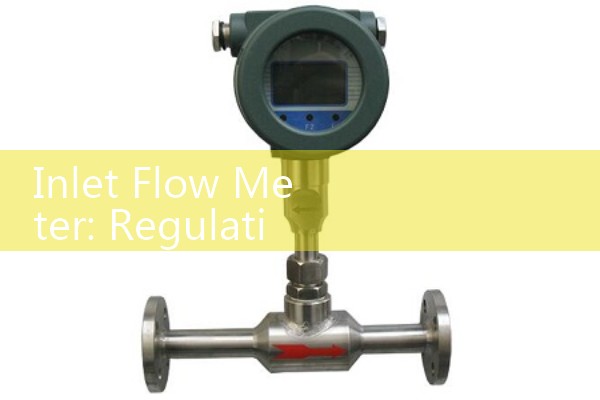
Electromagnetic flow meters are the first choice for clean or moderately dirty water. Tap water, bore water, chilled water, and cooling tower makeup water usually have conductivity above 20 µS/cm. These meters have no moving parts, handle DN15 to DN200, and deliver 0.5 percent of reading at normal flow rates. Use them on full pipes only.
Clamp-on ultrasonic meters work when cutting the pipe is not allowed. They mount on copper, steel, or PVC pipe from DN15 upward. Accuracy depends on pipe wall condition and correct entry of outer diameter, wall thickness, and material. A facility in Dubai used a clamp-on ultrasonic meter on a 40 mm chiller makeup line without a shutdown. The meter tracked daily intake with repeatability around 2 percent after setup.
Turbine or paddle wheel meters are lower cost but have a rotor. They work on clean water with no sand or rust. A Y strainer helps, but someone must clean it monthly. Oval gear meters are not a good fit for water because water viscosity is near 1 cP and slippage reduces accuracy. Keep oval gear meters on oil or fuel lines.
What Data to Send for a Quote
A vague enquiry wastes days. We need pressure in bar, temperature in °C, pipe size in DN, and flow range. Typical chiller makeup line conditions are 1 to 10 bar, 4 to 40 °C, DN25, and 0.2 to 12 m3/h. An ice machine may need 0.5 to 3 L/min, which is below many standard inline meter ranges. Tell us the building management system input. Most systems accept 4-20 mA analog or pulse. We often supply a single inlet flow meter with 4-20 mA, pulse, and RS485 Modbus options. HART is available on request.
Chiller Protection and Water Reporting
A chiller with low water flow can freeze the evaporator, damage the compressor, or trip on low suction pressure. Inlet flow monitoring is low cost protection. A food processing plant in Indonesia had two 180 kW water cooled chillers. The chillers tripped at night when the cooling tower basin level fell. Silver Instruments electromagnetic meters were installed on the condenser water inlet lines. The PLC locked out the compressor when flow fell below 60 percent of design for 15 seconds. That stopped the repeated trips and protected the compressors.
Water reporting is also a compliance task in Australia, Singapore, and the Middle East. A flow meter with a local totalizer and pulse output gives daily, weekly, and monthly totals. The operator can read the display or the building system can pull data over Modbus. No manual bucket tests.
Installation Notes That Prevent Bad Readings
Most engineers skip this part and later blame the meter. Because the meter needs a full pipe, install it at the lowest point of the loop or add a check valve downstream to hold water in the pipe. If the line drains between cycles, air bubbles will cause spike readings. Keep the meter away from a partially open solenoid valve that causes slug flow.
For electromagnetic meters, ground the meter correctly. Plastic pipes do not provide grounding. Silver Instruments can supply meters with built-in grounding electrodes for PVC installations. For clamp-on ultrasonic meters, clean the pipe and remove paint or loose scale. Apply the coupling gel. If the pipe has internal scale, readings can be high. We saw this at a hotel in Manila where a 50 mm steel pipe had 4 mm of scale. The clamp-on meter read 18 percent high until the pipe was cleaned.
Recommended Model Pairing
Use the Silver Instruments EMF series electromagnetic meter for DN15 to DN100 water intake lines. Pair it with a flow range of 0.1 to 100 m3/h depending on line size. Select 4-20 mA and pulse output on the same unit. For small OEM appliance loops, choose the EMF compact meter with DN8 or DN10 connections and a range of 0.05 to 30 L/min. For non-invasive retrofit or temporary audits, choose the Silver Instruments UFS clamp-on ultrasonic meter for DN15 to DN100 pipe.
FAQ
What is the difference between a flow switch and an inlet flow meter?
A flow switch gives a yes or no signal. A flow meter gives flow rate and total volume. Use a flow meter when you need batch control, leak detection, or water reporting.
Can one meter work for both chiller makeup and condenser water?
Yes, if the flow range and pipe size match. Use one meter per line for accurate totals. Install on the common makeup line after the backflow preventer.
Do I need to cut the pipe to install an inlet flow meter?
Not always. An inline electromagnetic meter needs a pipe cut and flanges or threaded ends. A clamp-on ultrasonic meter does not need a cut but requires a clean pipe surface.
What accuracy can we expect on a DN25 water line?
An electromagnetic meter typically gives 0.5 percent of reading above 0.3 m/s. A clamp-on ultrasonic meter is more dependent on pipe data and may give 1 to 3 percent repeatability on clean pipe.
Can the meter send data to a building management system?
Yes. Use 4-20 mA, pulse, or RS485 Modbus. HART is also available for process plant integration.
Get a Specific Quote for Your Water Intake Line
Silver Automation Instruments is a flow meter manufacturer and supplier for water intake, chiller, and OEM appliance lines. Send us your pressure (bar), temperature (°C), pipe size (DN), and flow range. We will reply with a model, a price, and a delivery time.
Tel: +86-135-1213-1526
Whatsapp: 86-135-12131526
WeChat: +86 13512131526
Website: flow-meter.com.au
 Hot Product
 Related AD
