


『Inline Liquid Flow Meter: Sizing Turbine and Vortex Transmitters for Pure Processing Water』Related information(v cone flow meter|rotary gas meter|gallon meter|gear meter|metal tube rotameter|glass tube rotameter|nutating disk meter|transit time ultrasonic flow meter|wedge flow meter|pd meters|hydraulic flow meter|ultrasonic water flow meter|water flow meter|air flow meter|magnetic water flow meter|oxygen flow meter|gas flow meter|argon flow meter|air velocity meter|gasoline flow meter|fuel flow meter|ultrasonic water meter|digital water meter|nitrogen flow meter|solid flow meter|Oxygen tank flow meter|digital water flow meter|diesel fuel flow meter|steam flow meter|02 flow meter|compressed air flow meter|oil flow meter|liquid flow meter)

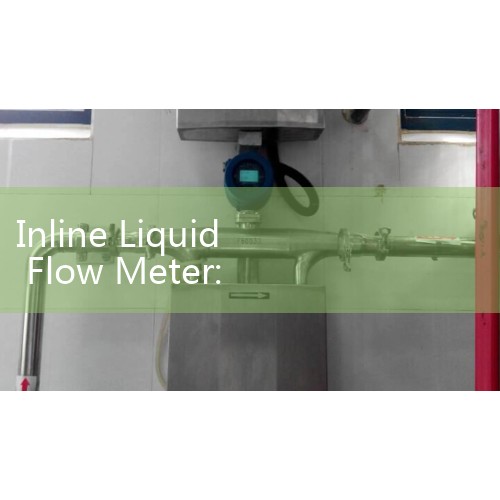
Inline Liquid Flow Meter: Sizing Turbine and Vortex Transmitters for Pure Processing Water
Quick Answer: For pure processing water, inline turbine transmitters fit DN15 to DN50 lines with stable flow above 0.5 m/s. Vortex transmitters work better for DN50 to DN200 headers, higher temperatures, and wider turndown. Send your pipe size (DN), flow range in kg/h or L/h, temperature in °C, and pressure in bar to Silver Automation Instruments for a sizing check.
Pure water has low conductivity, often below 1 µS/cm. Many standard electromagnetic flow meters cannot read this fluid reliably. Turbine and vortex inline meters do not depend on conductivity. They respond to flow velocity, which suits reverse osmosis permeate, deionized water, WFI, and purified water loops.
Sizing Starts With Conductivity, Pipe Size, and Flow Velocity
A DN25 purified water line flowing at 1 m3/h has a velocity of about 0.5 m/s. This is enough for many turbine meters. A DN50 header at 10 m3/h runs near 1.4 m/s, which is comfortable for vortex metering. Do not size by pipe diameter alone. Flow range matters more. Pure water systems often have low night flow and peak shift flow, so turndown can be 10 to 1 or higher.
Water at 25 °C with viscosity near 1 cP reaches a Reynolds number above 20000 at about 0.8 m/s in DN25 pipe. Vortex meters need that minimum Reynolds number. Turbine meters do not. Temperature also matters. WFI loops often run at 80 to 90 °C. Standard turbine bearings wear faster at those temperatures. A 316L vortex body with no moving parts usually handles the heat better.
Turbine Flow Transmitter Sizing for Pure Water
Silver Automation Instruments supplies a TU series inline turbine transmitter for low viscosity fluids such as pure water, condensate, and light solvents. For DN15 to DN25 pure water lines at 0.2 to 5 m3/h, a TU-015 or TU-025 with PVDF rotor and ceramic bearings is a common fit. Most turbine meters need at least 0.2 to 0.5 m/s to stay repeatable.
Last year a customer in Vietnam had a DN25 turbine meter on an RO permeate line. The meter stalled at 0.02 m3/h. Actual night flow was 0.08 m3/h. We replaced it with a smaller DN10 meter and the signal became stable. Use 316L bodies and ceramic or PTFE bearings in pure water. Accuracy can reach ±0.5% of reading. Pulse output is standard for PLC batch control.
Vortex Flow Transmitter Sizing for Pure Water
Silver Automation Instruments also supplies a VX series inline vortex transmitter for clean and low conductivity liquids. Common sizes are DN15 to DN200. A DN50 vortex meter can cover 3 to 30 m3/h on water depending on model and minimum Reynolds number. A DN80 meter covers roughly 8 to 90 m3/h depending on pressure and temperature. These m
_600x400.jpg)
Vortex meters have no moving parts. They survive small O-ring fragments and pipe scale better than turbine rotors. But they need more upstream straight pipe. Plan for 15D upstream and 5D downstream. Turbine meters need about 10D upstream and 5D downstream. Pressure drop is another point. Vortex meters can add 0.2 to 1.0 bar in small lines. Turbine meters often add 0.1 to 0.5 bar at high flow.
Turbine vs Vortex and Installation Signals
Here is the thing. No single meter fits every pure water line. Turbine suits DN4 to DN50 with narrow or moderate flow range. Vortex suits DN50 and larger, or hot WFI loops with difficult maintenance conditions. We have seen this on customer sites many times: a DN40 vortex meter on a small skid created too much pressure drop. A turbine meter was the better fit.
Install the meter in a full pipe. Avoid air pockets, especially in pure water systems with ozone injection and high points. Use a 100 micron strainer upstream if debris is possible. Output options include 4-20 mA HART, pulse, and RS485 Modbus. Batch systems prefer pulse. DCS and remote monitoring prefer HART or Modbus. Silver Automation Instruments can add a PT100 temperature sensor and a pressure transmitter if you need a complete water audit station.
FAQ: Inline Liquid Flow Meter Sizing for Pure Water
Can a standard electromagnetic flow meter measure pure processing water? Most electromagnetic flow meters need at least 5 µS/cm conductivity. Pure water often has less than 1 µS/cm. Turbine and vortex meters fit this application better.
What is the minimum flow for a DN25 vortex flow meter on pure water? A typical DN25 vortex meter needs about 0.8 to 1.0 m/s. That equals roughly 1.6 to 2.0 m3/h. Below that, use a DN15 turbine meter or reduce the line size.
Does a turbine meter work with deionized water? Yes. Use a 316L body and ceramic or PTFE bearings. Deionized water is clean and low viscosity, which is good for a turbine rotor.
Which meter suits a WFI loop at 85 °C? A vortex flow transmitter is usually better. It has no moving parts and handles 85 °C continuous service. Check the pressure rating at that temperature.
What should I send for a sizing quote? Send us your pipe size (DN), flow range in kg/h or L/h, temperature in °C, pressure in bar, and output signal preference. Silver Automation Instruments will reply with a sizing sheet and price quote.
Silver Automation Instruments is a flow meter manufacturer and supplier for pure processing water, RO permeate, and deionized water systems. Tel: +86-135-1213-1526, WhatsApp: 86-135-12131526, WeChat: +86 13512131526.
 Hot Product
 Related AD
