


『Flow Meter Before or After Control Valve Positioning: Eliminating Pressure Drop Flashing』Related information(v cone flow meter|rotary gas meter|gallon meter|gear meter|metal tube rotameter|glass tube rotameter|nutating disk meter|transit time ultrasonic flow meter|wedge flow meter|pd meters|hydraulic flow meter|ultrasonic water flow meter|water flow meter|air flow meter|magnetic water flow meter|oxygen flow meter|gas flow meter|argon flow meter|air velocity meter|gasoline flow meter|fuel flow meter|ultrasonic water meter|digital water meter|nitrogen flow meter|solid flow meter|Oxygen tank flow meter|digital water flow meter|diesel fuel flow meter|steam flow meter|02 flow meter|compressed air flow meter|oil flow meter|liquid flow meter)

Flow Meter Before or After Control Valve Positioning: Eliminating Pressure Drop Flashing
Quick Answer: Install the flow meter before the control valve. This keeps the meter under higher line pressure and avoids vapor breakout from valve pressure drop. For most liquid, gas, and steam lines, upstream placement is the safe default.
Silver Automation Instruments supplies flow meters to industrial plants and distributors in over 40 countries. Engineers from Vietnam, Mexico, Nigeria, Saudi Arabia, and Chile often ask the same question. Should the flow meter go before or after the control valve? The answer depends on fluid vapor pressure, downstream pressure, and flow meter type. But the default rule is clear. Put the flow meter before the control valve.
Why Upstream Flow Meter Installation Works
A control valve creates pressure drop. The valve outlet pressure can fall below the liquid vapor pressure. Liquid then flashes into vapor bubbles. A flow meter after the valve sees a two phase mixture. That mixture is not the true liquid flow. Electromagnetic flow meters show unstable values. Vortex meters can lose signal. Coriolis meters may still run but show density errors.
Upstream of the control valve the line pressure is higher. The liquid stays in one phase. The meter sees a flooded pipe, a stable velocity profile, and no vapor breakout. This gives repeatable measurement. One DN80 electromagnetic flow meter on a chemical line in Indonesia read 12 percent high after a control valve. Moving the same meter upstream removed the error.
What Happens After a Control Valve
Here is the thing. Many engineers only check the flow range. They ignore the pressure at the meter location. A control valve can drop pressure by 2 bar, 5 bar, or 10 bar. If the liquid is close to its boiling point, flashing starts quickly after the valve. This happens in LPG, light naphtha, hot water, and refrigerants.
We have seen this on customer sites many times. A paint manufacturer in Southeast Asia installed an oval gear flow meter after a control valve. The reading jumped by 18 percent during low flow. The cause was vapor bubbles passing through the meter. We moved the meter before the valve and added a back pressure valve downstream. The reading settled.
When Downstream Flow Meter Position is Acceptable
Downstream placement can work for low vapor pressure liquids. Cooling water and treated wastewater usually stay in liquid form after a valve. You still need to check that the pressure at the meter stays at least 1 bar above the vapor pressure. For water at 25 °C this is easy. For hot water at 120 °C the margin is smaller.
For gases, downstream placement is less critical. Gas does not flash like a liquid. But pressure drop reduces gas density. A vortex flow meter or thermal mass flow meter will read a different value after the valve than before it. If you need standard volume flow or mass flow, upstream placement with pressure compensation is better.
Flow Meter Type Selection for Control Valve Applications
Silver Automation Instruments recommends these meters for control valve installations. An electromagnetic flow meter suits water, wastewater, acids, and slurries from DN10 to DN1200. A Coriolis mass flow meter suits fuels, solvents, and liquefied gases. A vortex flow meter suits steam, compressed air, and natural gas from DN15 to DN300. An oval gear flow meter s
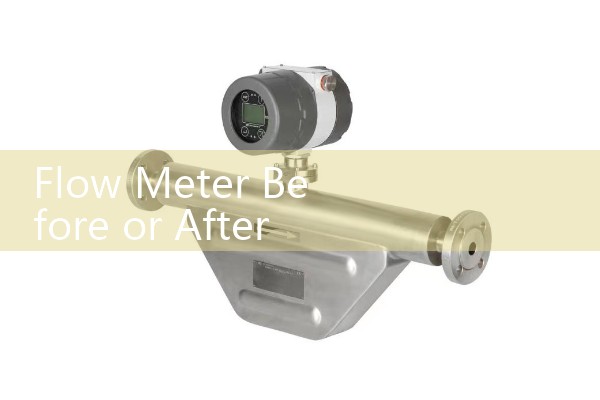
If the meter must sit after the control valve, select a Coriolis meter for critical liquids. For non critical water lines, an electromagnetic meter can work if the back pressure is high enough. We also ask for upstream pressure, downstream pressure, fluid temperature, vapor pressure, and pipe size. These values tell us whether flashing is possible.
Installation Rules for Control Valve and Flow Meter Positioning
Follow these rules to avoid pressure drop flashing. Keep the flow meter at least 5D upstream of the control valve. Maintain the required straight run for the meter type. For an electromagnetic flow meter use 10D upstream and 5D downstream. For a vortex flow meter use 15D upstream and 5D downstream. Install a pressure gauge downstream of the valve. The gauge helps you confirm the downstream pressure stays above vapor pressure.
Most engineers skip this part. They install the meter where it is easy to access. That location is often after the control valve. In practice we recommend a short straight pipe before the valve for the meter. This gives the best accuracy and protects the meter from flashing damage.
Customer Site Example from Desalination and Chemical Plants
A desalination plant in Saudi Arabia needed a seawater flow meter on a high pressure feed line. The control valve was downstream of the reverse osmosis membranes. We installed a DN150 electromagnetic flow meter before the control valve. The pressure at the meter was 18 bar. The downstream pressure was 3 bar. This avoided air release and unstable readings. The meter has run for two years with no drift.
In Mexico, a chemical distributor used a Coriolis mass flow meter after a control valve on a toluene line. The downstream pressure was too low and the meter showed density swings. We moved the Coriolis meter before the valve and added a pressure transmitter at the valve outlet. The problem disappeared in one day. These cases repeat because flashing is a pressure problem, not a meter problem.
FAQ
Should a flow meter be installed before or after a control valve?
Install the flow meter before the control valve. This keeps line pressure high and avoids flashing and cavitation. It gives a stable one phase flow to the meter.
Can a magnetic flow meter be installed after a control valve?
Yes, if the liquid stays above its vapor pressure. For water at low temperature this can work. For hot water, solvents, or LPG, place the meter upstream.
What causes flashing after a control valve?
The valve reduces pressure. When downstream pressure drops below the liquid vapor pressure, the liquid boils and forms vapor bubbles. This is flashing. It causes measurement errors.
Which flow meter works best close to a control valve?
A Coriolis mass flow meter handles some two phase flow better than others. An electromagnetic flow meter works well upstream of a valve. A vortex meter needs straight run and stable flow.
How do I get a flow meter quote for a control valve application?
Send us your pressure in bar, temperature in °C, pipe size in DN, and flow range. Tell us the fluid name and whether the meter will sit before or after the valve. Contact Silver Automation Instruments. Tel +86-135-1213-1526. WhatsApp 86-135-12131526. WeChat +86 13512131526.
 Hot Product
 Related AD
