


_500x500.jpg)
『Siemens Flow Meter Field Guide: Troubleshooting Electromagnetic and Ultrasonic Models』Related information(v cone flow meter|rotary gas meter|gallon meter|gear meter|metal tube rotameter|glass tube rotameter|nutating disk meter|transit time ultrasonic flow meter|wedge flow meter|pd meters|hydraulic flow meter|ultrasonic water flow meter|water flow meter|air flow meter|magnetic water flow meter|oxygen flow meter|gas flow meter|argon flow meter|air velocity meter|gasoline flow meter|fuel flow meter|ultrasonic water meter|digital water meter|nitrogen flow meter|solid flow meter|Oxygen tank flow meter|digital water flow meter|diesel fuel flow meter|steam flow meter|02 flow meter|compressed air flow meter|oil flow meter|liquid flow meter)

Siemens Flow Meter Field Guide: Troubleshooting Electromagnetic and Ultrasonic Models
Quick Answer: Most electromagnetic flowmeter faults come from empty pipe, incorrect grounding, or coating on electrodes. Ultrasonic meters fail more often because of poor acoustic coupling, air bubbles, or misaligned transducers. Check wiring, conductivity, and process conditions before replacing any sensor. For fast replacement, give us your pipe size, pressure, temperature, and medium.
Silver Automation Instruments has supplied flow meters to over 40 countries. We see the same mistakes on sites in Malaysia, Indonesia, Nigeria, and Saudi Arabia every month. This guide pulls from real field data and the Siemens flow meter handbook, but we trimmed the theory. You get straight diagnostics and fixes for electromagnetic and clamp-on ultrasonic models.
Electromagnetic Flow Meter Troubleshooting
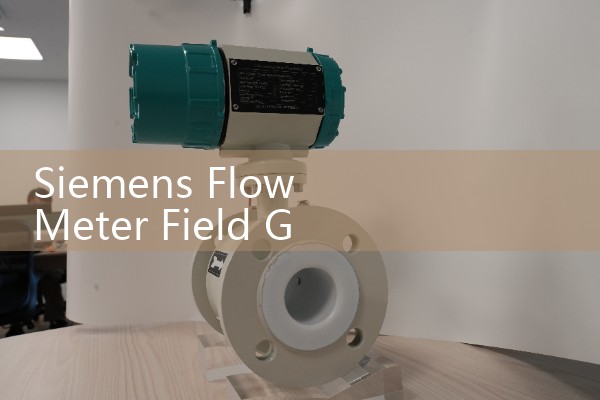
Electromagnetic flowmeters need a full pipe, stable grounding, and a fluid conductivity above 5 µS/cm. When the transmitter shows zero flow while the pump is running, check the empty pipe detection first. Many plants use magmeters on chemicals with low conductivity without realising the limit. A paint manufacturer in Southeast Asia swapped an E+H unit for our SLDG magmeter after finding the epoxy resin medium dropped below 3 µS/cm during mixing. The new unit with platinum electrodes and a grounding ring solved the measurement drift.
Signal coil failures are rare. More often the analogue output is set to the wrong range. On Siemens MASS 6000 or similar transmitters, a 4-20 mA HART signal can appear stuck at 4 mA if the cut-off value is too high. Reduce the low flow cut-off to 0.1 m/s before assuming the board is dead. Also check the wiring polarity on the excitation cable. Reversed wires flip the flow direction sign but the digital display might still show a positive value. We have seen this confuse operators on DN100 lines in a dairy plant in Australia.
Coating on electrodes is the silent killer. Grease, sludge, or scale builds up slowly. The meter reads low for weeks until an engineer compares it with a portable ultrasonic clamp-on. Clean the electrodes with a soft brush. Do not use a metal scraper. In wastewater applications, a PTFE liner with built-in cleaning electrodes works longer. If the installation has no access for removal, spec a model with hot-tap cleaning ports from day one.
Ultrasonic Flow Meter Troubleshooting
Clamp-on ultrasonic meters live and die by the couplant. A Venezuelan customer called us after three days of unstable readings on an 8-inch water line. The transducer mounts were rigid, but the gel had dried up under the sun. After using high-temperature coupling pads and adding a shade cover, the signal strength jumped from 2 to 45. Most engineers skip this part. They blame the meter, not the installation.
Signal loss can also come from aeration. Anything above 1% gas bubbles scatters the acoustic path. Watch the sound velocity reading in the diagnostics menu. If it fluctuates more than ±3 m/s compared to the expected value for the media, there is air or gas. Fix the pump seal or move the sensor to a vertical pipe section with upward flow. On a desalination plant near Jeddah, we moved the transducer from a horizontal spool to a vertical riser and solved error 852 entirely.
Misalignment between transducers is common o
When Repair Makes No Sense
Some Siemens flow sensor bodies are obsolete, especially older MAG 1100 or SITRANS F US models with special cable connectors. A new stainless-steel sensor from Silver Instruments costs less than a factory repair, and we ship same week from Nanjing to Dammam, Lagos, or Jakarta. The measurement error is within 0.2% on our SLDU clamp-on series, matching the performance of a factory-calibrated Siemens clamp-on at half the price. Every unit leaves with a wet-calibration certificate traceable to ISO 17025.
We keep stock of PTFE, rubber, and PFA-lined magmeters from DN6 to DN2000. For chemical dosing, the SLW vortex flowmeter is often a better fit because it ignores conductivity changes. For molasses or heavy fuel oil, our oval gear meter handles 0.5 to 1,000 cP without issue.
FAQ
Q: My electromagnetic flowmeter flashes empty pipe but the pipe is full.
A: Check the grounding ring or grounding electrode. A corroded ground increases impedance and triggers false empty detection. Also measure the media conductivity. Values under 5 µS/cm (demin water) demand a special electrode design.
Q: Why does my ultrasonic meter show flow even when the pump is off?
A: Acoustic noise from nearby VFD drives or pipe vibration can mimic a transit-time signal. Enable the noise filter in the transmitter and route signal cables away from power cables. A metal conduit helps.
Q: Can I use a clamp-on ultrasonic meter on old cast iron pipe?
A: Yes, but only if the inner wall is smooth. Scale or tuberculation kills the signal. Use a Z-mount and check signal quality on the SITRANS F diagnostic screen. If Q signal is under 30%, a spool piece with a magnetic meter will be more stable.
Q: The 4-20 mA output drifts by 0.5 mA every month. Is the transmitter faulty?
A: Not always. A loss of analogue loop voltage can cause drift. Measure the loop supply at the terminals while the circuit is closed. You need at least 21 V DC for a 500 ohm load. Silver Instruments transmitters accept 12 to 36 V DC with active noise filtering.
Q: We need a replacement flowmeter for seawater desalination. What do you recommend?
A: For RO feed lines, a magnetic flowmeter with PVDF liner and titanium electrodes (model SLDG-C-Ti) is the standard. For brine lines, use a non-contact clamp-on ultrasonic with high-temperature pads. Tell us your pipe size, TDS level, and pressure rating, and we will send a quote within 4 hours.
Get a direct offer now. Send your pipe size (DN), medium, pressure (bar), temperature (°C), and flow range to [email protected]. WhatsApp: 86-135-12131526. WeChat: +86 13512131526. Office phone: +86-135-1213-1526. Silver Automation Instruments ships from Nanjing, China, with full documentation for customs clearance in Southeast Asia, Oceania, Middle East, Africa, and South America.
 Hot Product
 Related AD
