


『How Does a Variable Area Flow Meter Work: Balances fluid upward drag forces against a weighted internal float resting inside a tapered tube.』Related information(v cone flow meter|rotary gas meter|gallon meter|gear meter|metal tube rotameter|glass tube rotameter|nutating disk meter|transit time ultrasonic flow meter|wedge flow meter|pd meters|hydraulic flow meter|ultrasonic water flow meter|water flow meter|air flow meter|magnetic water flow meter|oxygen flow meter|gas flow meter|argon flow meter|air velocity meter|gasoline flow meter|fuel flow meter|ultrasonic water meter|digital water meter|nitrogen flow meter|solid flow meter|Oxygen tank flow meter|digital water flow meter|diesel fuel flow meter|steam flow meter|02 flow meter|compressed air flow meter|oil flow meter|liquid flow meter)

How Does a Variable Area Flow Meter Work?
A variable area flow meter balances fluid upward drag forces against a weighted internal float resting inside a tapered tube. The tube diameter widens from bottom to top. Fluid enters from the bottom. The float rises until the open annular area around it creates enough drag to equal the net downward force. This is direct mechanical flow measurement.
Quick Answer
Fluid moves upward through a tapered tube. The float lifts because of the fluid drag force. As the float rises, the annular gap between the float and the tube wall becomes larger. The float stops where the upward drag equals the float weight. The float position gives a local flow rate on a scale.
Force Balance Inside the Tapered Tube
Three forces act on the float. Gravity pulls the float down. Buoyancy from the fluid acts upward. Fluid drag also acts upward on the float. In most liquid and gas applications, gravity is the dominant downward force. The net downward force is the float weight minus buoyancy. The upward drag force depends on velocity and the annular flow area.
Here is the thing. The tube is not straight. The cross section increases with height. At low flow, the float sits low. The gap is small. Fluid velocity through that gap is high. At high flow, the float rises. The gap becomes wider. Velocity drops until the drag force matches the float weight again. Because the tube taper is known, the float position becomes a repeatable flow indication.
How the Float Position Becomes a Flow Reading
Most variable area flow meters have a scale printed on the glass tube or on a metal indicator plate. The reading is usually scaled for water at 20 °C or air at 1.013 bar and 20 °C. If your fluid has a different density or viscosity, the reading shifts. You must correct the scale using standard rotameter sizing formulas.
In practice, a metal tube variable area flow meter uses a magnetic coupling. The float contains a magnet. The indicator outside the tube follows the float position. This design avoids direct contact with the fluid. It works for high pressure gas, steam, and hot water. So the local scale gives a direct reading without power.
Metal Tube vs Glass Tube Variable Area Flow Meters
Glass tube rotameters suit air, water, nitrogen, and other clean media. Pressures are usually below 10 bar and temperatures below 100 °C. Common sizes include DN15, DN25, and DN50. They are popular in laboratories, water treatment plants, and food packaging lines.
Metal tube variable area flow meters handle more aggressive service. A typical metal tube meter uses 316L stainless steel wetted parts. Options include PTFE lining for acids, steam service to 400 °C, and pressure ratings to 220 bar. Most industrial buyers choose metal tube units for ammonia, fuel oil, steam, and chemical dosing.
Variable area meters also work on demineralized water. Unlike a magnetic flow meter, a rotameter does not need a minimum conductivity such as 20 µS/cm.
Key Sizing Data You Need Before Buying
Do not guess the flow range. Send us the fluid name and operating data. We need flow range in L/h, m3/h, or kg/h. We need pressure in bar, temperature in °C, and pipe size in DN. For liquids, give viscosity in cP. If viscosity is above 10 cP, the float response changes and the meter may need a special calibration.
Most engineers skip this part. A variable area flow meter is not a high accuracy device. Standard accuracy is 1.6% to 2.5% of full scale. Turndown is usually 10 to 1. If you need 0.5% accuracy, choose a Coriolis mass flow meter from Silver Automation Instruments. If you need local indication without power, a rotameter is often the right fit.
Common Industrial Applications
We see these meters in chemical dosin
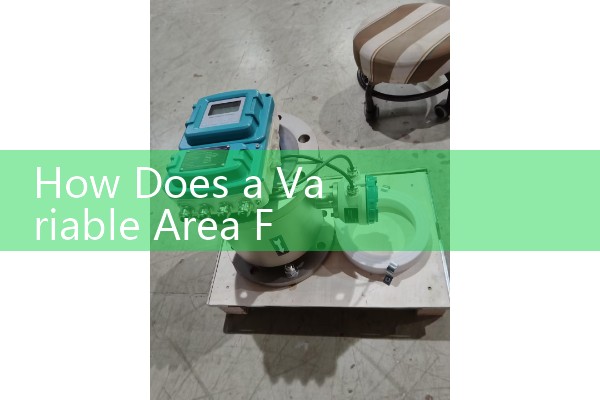
Last year a customer in Vietnam asked us for a variable area flow meter for an ammonia injection skid. The line size was DN15. Operating pressure was 4 bar. The flow range was 5 to 50 L/h. The solution was a 316L stainless steel metal tube meter with a 4-20 mA HART transmitter. This meter gives local indication and a signal to the plant PLC.
For seawater desalination plant dosing lines, variable area flow meters work for antiscalant, citric acid, and sodium bisulfite. Plastic or PTFE lined internals resist the chemicals. The local scale keeps operator checks simple.
We have seen this on customer sites many times. A DN25 metal tube rotameter lasts for years in a sodium hypochlorite dosing line. The plant only checks the float position during daily rounds.
Output and Transmitter Options
Basic variable area flow meters give only local indication. If you need remote reading, add a transmitter. Silver Automation Instruments supplies 4-20 mA HART output options for metal tube rotameters. ATEX Zone 1 versions are available for hazardous area gas lines. This is common in oil and gas metering skids.
Do not use a variable area flow meter for pulsating flow. Piston and gear meters handle pulsing better. If your flow changes very slowly, a rotameter is stable and reliable. If you have rapid changes, the float can bounce. A flow conditioner or a different meter type helps.
For steam mass flow, add a PT100 temperature sensor and a pressure transmitter. The plant PLC can calculate mass flow from these signals.
FAQ on Variable Area Flow Meters
Q1: Can a variable area flow meter measure gas and liquid with the same scale?
The scale is valid for one fluid at one set of conditions. For other fluids, you need a correction factor. Tell us your fluid, pressure, temperature, and flow range. We will calculate the correct scale.
Q2: What is the typical accuracy of a metal tube variable area flow meter?
Standard accuracy is 1.6% to 2.5% of full scale. A Coriolis mass flow meter from Silver Automation Instruments gives 0.1% to 0.2% of rate accuracy if that is what you need.
Q3: Can I use a variable area flow meter for hot water or steam?
Yes. Use a metal tube design with high temperature internals. We supply units for water to 200 °C and steam to 400 °C. Send us the steam pressure in bar and the flow in kg/h.
Q4: Do I need straight pipe runs for a rotameter?
No. Unlike orifice plates and turbine meters, variable area flow meters do not require long straight pipe runs. Install them vertically with upward flow. A bypass line helps during maintenance.
Q5: How do I get a price for a variable area flow meter?
Send us your fluid name, pressure in bar, temperature in °C, pipe size in DN, and flow range in L/h or kg/h. Our technical team will reply with a model, material selection, and price. Call our office at +86-135-1213-1526 or reach us on WhatsApp at 86-135-12131526.
Final note from Silver Automation Instruments
Silver Automation Instruments is a flow meter manufacturer in China. We supply variable area flow meters, Coriolis mass flow meters, electromagnetic flow meters, ultrasonic flow meters, and thermal mass flow meters. We also supply pressure transmitters and paperless recorders. Most variable area flow meters ship within 10 working days from our factory. Send your process data to flow-meter.com.au or use WeChat at +86 13512131526. We will recommend a meter that fits the actual pipe and process.
 Hot News
 Related AD
