


『Flow Meter 3/4 Inch PVC Models: Sizing and Testing Flow Rates for Hydroponics』Related information(v cone flow meter|rotary gas meter|gallon meter|gear meter|metal tube rotameter|glass tube rotameter|nutating disk meter|transit time ultrasonic flow meter|wedge flow meter|pd meters|hydraulic flow meter|ultrasonic water flow meter|water flow meter|air flow meter|magnetic water flow meter|oxygen flow meter|gas flow meter|argon flow meter|air velocity meter|gasoline flow meter|fuel flow meter|ultrasonic water meter|digital water meter|nitrogen flow meter|solid flow meter|Oxygen tank flow meter|digital water flow meter|diesel fuel flow meter|steam flow meter|02 flow meter|compressed air flow meter|oil flow meter|liquid flow meter)

Flow Meter 3/4 Inch PVC Models: Sizing and Testing Flow Rates for Hydroponics
Quick Answer
For most hydroponic NFT, drip, and dutch bucket loops, a 3/4 inch PVC flow meter with a 1 to 25 L/min range works well. Match the meter to the normal zone flow, not the pump maximum, and verify the reading with a 10 L bucket and stopwatch after startup. Air in a 3/4 inch PVC line causes more error than most meter specifications.
Why This Size and Material Matter
Three quarter inch PVC pipe is common in greenhouse benches and small recirculating systems. The inside diameter is around 20 mm. That size handles normal zone flows between 2 and 15 L/min without high pressure drop.
Use a PVC body with EPDM seals for standard nutrient solution. The typical range is pH 5.5 to 6.5 at 10 to 35 °C. Avoid brass or aluminum wetted parts because acidic nutrient blends attack them. PVC with a PP or PVDF rotor is the safe combination.
Sizing the Flow Range Correctly
Start with the actual flow at your operating pressure. A pump rated 30 L/min at open discharge may only deliver 7 L/min through a fouled filter and 3/4 inch dripper lines. Measure the pressure after the filter and the flow at the last dripper. Then pick a range where normal flow sits between 30 and 70 percent of full scale.
An NFT channel needs 1 to 2 L/min. A bench with 50 channels needs roughly 50 to 100 L/min total. A 3/4 inch meter fits one bench or one zone, not the main header. If your zone runs 5 to 10 L/min, select a 1 to 20 L/min meter. If the zone runs 2 to 5 L/min, select a 0.5 to 10 L/min version.
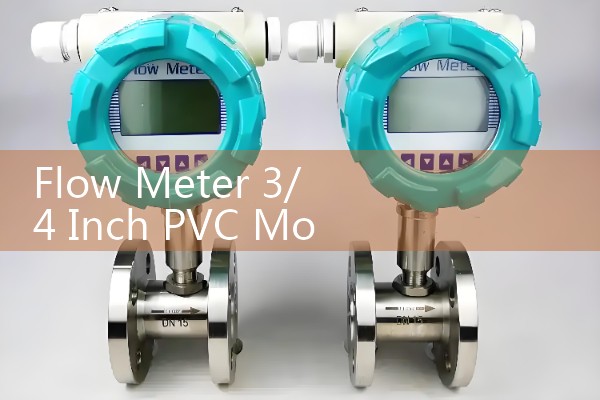
Silver Automation Instruments has a 3/4 inch PVC paddle wheel flow meter with a 1 to 25 L/min range, pulse output, and a local indicator. Accuracy is plus or minus 2 percent of full scale. At 5 L/min on a 25 L/min full scale meter, the possible error is around 0.25 L/min. In practice, that is enough for return monitoring. For dosing accuracy, use a DN15 electromagnetic flow meter from 0.1 to 20 L/min. It has no rotor and does not drift from biofilm.
Installation Position to Avoid False Readings
Install the flow meter in a horizontal run. Some paddle wheel types can run vertical only if water flows upward. For 3/4 inch PVC, keep 10 pipe diameters straight upstream and 5 downstream. That is about 200 mm and 100 mm.
Do not mount the meter right after an elbow or a valve. A customer in Vietnam mounted a 3/4 inch meter directly after a 90 degree elbow. The reading moved between 6.2 and 8.9 L/min. We moved the meter 250 mm downstream and the reading settled at 7.1 L/min.
Air is worse than short straight runs. Return lines from NFT channels often trap air. Put the meter on the pump discharge line under pressure or after a small air release valve. Do not put the meter at the highest point of the
How to Test Flow Rates in the Field
Use a bucket and stopwatch, not just the display. Most engineers skip this part. Run the pump for 15 minutes. Fill a 10 L bucket at the meter outlet and record the seconds. Divide 600 by the seconds. If the bucket takes 85 seconds, the flow is 7.1 L/min.
Compare that result with the flow meter reading. A difference above 5 percent usually means air, debris, or a blocked rotor. You can also put a pressure gauge before and after the meter. At 15 L/min, a 3/4 inch PVC paddle wheel meter should drop less than 0.2 bar.
Outputs for Hydroponic Automation
Pulse output works with simple irrigation computers and PLCs. Confirm the K factor. Many 3/4 inch PVC paddle wheel meters give 0.5 L per pulse or 1 L per pulse. A 4 to 20 mA output suits dosing skids and VFD control. RS485 Modbus is useful when you monitor multiple zones from one grow room controller.
Recommended Setup for Most Growers
For a 3/4 inch PVC return line, choose a paddle wheel meter with a PVC body, EPDM seals, PP rotor, and pulse output. Use a 1 to 25 L/min range for most zones. If you use aggressive cleaners or acid dosing, ask for FKM seals. If you need low flow accuracy under 0.5 L/min or no moving parts, choose a DN15 electromagnetic flow meter.
Silver Automation Instruments stocks 3/4 inch PVC flow meter models for hydroponics, water treatment, and light industrial use. Send your pressure in bar, temperature in °C, pipe size DN15, and normal flow range to WhatsApp at 86-135-12131526. You can call +86-135-1213-1526 or message via WeChat +86 13512131526. Specifications are at flow-meter.com.au.
FAQ: 3/4 Inch PVC Flow Meters for Hydroponics
What flow range should I choose for a 3/4 inch PVC flow meter in hydroponics?
Start with 1 to 20 L/min or 1 to 25 L/min for most NFT and drip zones. Measure the actual flow with a bucket before ordering.
Can a PVC flow meter handle nutrient solution?
Yes. PVC with EPDM or FKM seals handles standard hydroponic nutrient mixes at pH 5.5 to 6.5 and 10 to 35 °C. Do not use brass or aluminum wetted parts.
Why does my 3/4 inch flow meter reading jump?
Air bubbles are the most common cause. Move the meter to the pump discharge line or add an air release valve before the meter. Check that you have 10 pipe diameters of straight run upstream.
How do I test the flow meter accuracy?
Fill a 10 L bucket and time it with a stopwatch. Convert to L/min and compare with the meter reading. A difference above 5 percent points to air, debris, or a blocked rotor.
Which output is best for a hydroponic controller?
Use a pulse output for basic irrigation computers and PLCs. Use 4 to 20 mA for dosing skids or VFD control. Use RS485 Modbus for multi-zone monitoring.
 Hot News
 Related AD
