


『Totalizer Flow Meter: General principles of volumetric flow accumulation in piping systems.』Related information(v cone flow meter|rotary gas meter|gallon meter|gear meter|metal tube rotameter|glass tube rotameter|nutating disk meter|transit time ultrasonic flow meter|wedge flow meter|pd meters|hydraulic flow meter|ultrasonic water flow meter|water flow meter|air flow meter|magnetic water flow meter|oxygen flow meter|gas flow meter|argon flow meter|air velocity meter|gasoline flow meter|fuel flow meter|ultrasonic water meter|digital water meter|nitrogen flow meter|solid flow meter|Oxygen tank flow meter|digital water flow meter|diesel fuel flow meter|steam flow meter|02 flow meter|compressed air flow meter|oil flow meter|liquid flow meter)

Totalizer Flow Meter: General Principles of Volumetric Flow Accumulation in Piping Systems
Quick Answer: A totalizer flow meter adds up the volume that passes through a pipe over time, not just the instant flow rate. It works by taking the flow signal — from electromagnetic, vortex, ultrasonic, or Coriolis sensors — and integrating it into a cumulative volume reading. This simple function matters in custody transfer, batch dosing, and water distribution billing.
Why a Totalizer Is More Than Just a Counter
Most engineers look at a flow transmitter and only think about the 4-20 mA signal or the current litres per minute. That instant flow number is useful for control loops. But in many industrial processes you need to know how much liquid or gas actually moved through a pipe over the last hour, shift, or month. A totalizer does exactly that. It accumulates the volume continuously and stores the value in non-volatile memory. Silver Instruments builds this function into almost every flow meter electronics module, from the simplest digital display to advanced no‑paper recorders.
Here is the thing. Some plants still use separate mechanical counters driven by gear trains. These wear out. A modern electronic totalizer inside a magmeter or a vortex meter has no moving parts and can handle forward flow, reverse flow, and net total at the same time. A paint factory in Malaysia switched from mechanical totalizers to our electromagnetic flow meters with built‑in electronic accumulation and cut their maintenance downtime by two days per quarter. That kind of detail sticks with you.
How the Volumetric Accumulation Works in a Piping System
The principle is straightforward. A flow sensor sends a pulse or an analogue signal proportional to the instantaneous flow rate. The transmitter converts that signal into a volume per unit time — typically m³/h or L/min. A microcontroller then samples this value every few milliseconds and multiplies each small flow slice by the time interval. The result gets added to a running total. That is the totalized volume in m³, L, gallons, or barrels.
In a piping system, the totalizer usually sits inside the flow meter converter or a remote display unit. For example, our DN15 to DN300 electromagnetic flow meters output both a 4-20 mA HART signal for the DCS and a digital pulse for an external totalizer. But most customers skip the external counter because the onboard display already shows both rate and total. A water utility in the Philippines uses this dual‑output setup to feed SCADA and a local billing register from the same flow tube. Simple. No extra wiring.
Because many pipes see bidirectional flow, a good totalizer needs to handle reverse flow. Some end users only want the forward total; others need the net total for mass balance. Our converters let you select forward, reverse, net, or two separate registers. A juice blending line in South Africa runs two separate accumulation registers for raw syrup and prepared batch volume from one Coriolis meter. That saves them the cost of a second instrument.
Key Inputs That Affect Totalizer Accuracy
The total only makes sense if the flow measurement itself is accurate. An electromagnetic flow meter totalizing with 0.5% of rate uncertainty will accumulate an error that grows linearly. In a dosing application for a batch of 10 000 L, a 0.5% error means 50 L off target. That is enough to ruin a recipe. Silver Instruments supplies magmeters with 0.2% optional accuracy for exactly this reason.
Temperature and density changes matter too. A vortex meter totalizing steam volume at 180 °C and 10 bar needs pressure and temperature compensation. Otherwise the totalized volume is just the actual cubic metres at flowing conditions, not the mass or the compensated volume. Most engineers skip this part early in a project and then wonder why the inventory doesn’t match. We have seen a textile plant in Indonesia over‑report steam consumption by 12% just because density compensation was off. Adding a PT100 and a pressure transmitter to the totalizer input solved it in one afternoon.
For viscous fluids — think heavy fuel oil at 300 cP
Typical Industries and Pipe Sizes for Totalizer Flow Meters
You find totalizers in small DN10 chemical injection lines as well as DN600 cooling water mains. A desalination plant in Oman uses our ultrasonic clamp‑on meters with wall‑mounted totalizers on 500 mm pipes. The accumulation data goes straight into the ERP for water accounting. On the other end of the scale, a pharmaceutical company doses purified water through a DN4 Coriolis meter with a local totalizer that triggers a valve after every 50 L dose. Same concept, different size.
In the oil and gas sector, custody transfer skids often require two independent totalizers on the same flow computer. We build systems with dual pulse outputs from a turbine or Coriolis meter so the buyer and seller each have a tamper‑proof total. A fuel depot in Lagos uses this configuration with our pressure transmitters compensating the volume to standard conditions. No arguments at month‑end reconciliation.
Silver Instruments Totalizer Options Across Product Lines
Most of our flow meters come with an integrated totalizer as standard. The electromagnetic flow meter range from DN3 to DN3000 offers a backlit LCD showing rate, total, and diagnostics. You can reset the total via the keypad or lock it with a password for billing applications. The ultrasonic clamp‑on meters store totalizer data even during power loss. Our vortex flow meters log daily and monthly totals in the same converter that computes mass flow.
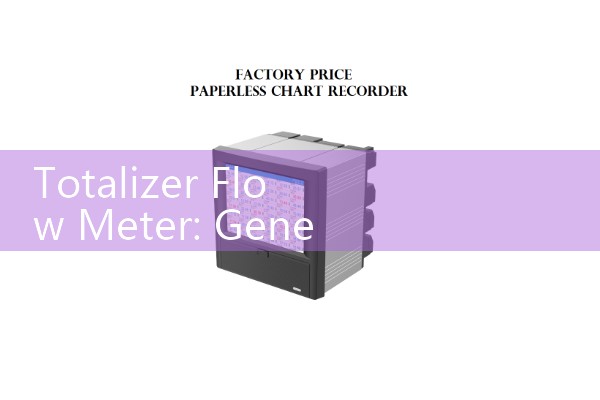
For customers who want a separate device, the paperless recorder can act as a multi‑channel totalizer. It accepts 4-20 mA, pulse, and Modbus inputs from up to 12 flow meters and shows all totals on one screen. A wastewater plant in Australia replaced five individual mechanical counters with one recorder and cut panel space by 60%.
Because remote monitoring is growing, we also offer RS485 and Modbus RTU outputs so the totalizer value can be read directly by a PLC or IoT gateway. This is common in mining applications in Chile, where flow data from remote pipelines goes to a central control room via radio.
FAQ
Can I add totalizer function to an existing flow meter?
Yes, if the meter has a pulse output or a 4-20 mA output. Silver Instruments offers wall‑mounted totalizer displays that scale the input signal and accumulate volume. Send us the pulse per litre value and power supply, and we will configure it.
What is the difference between a flow totalizer and a batching controller?
A totalizer only accumulates. A batch controller compares the total to a preset value and closes a valve or starts a pump. We provide both functions in one instrument when needed, especially for food and chemical dosing.
How do I handle totalizer readings across different fluid temperatures?
For liquids, the volume change is small. For gases and steam, you need a flow computer or meter with built‑in temperature and pressure compensation. Our vortex meters have this as a standard option.
Does the totalizer lose data during a power cut?
All Silver Instruments totalizers store the value in non‑volatile memory. The last total is restored when the power returns. No battery needed in most models.
What pipe size and flow range do you need to recommend a totalizer flow meter?
Tell us the pipe material, inner diameter (DN), fluid type, minimum and maximum flow rate, pressure (bar), and temperature (°C). We will propose a magmeter, ultrasonic, or vortex model with the correct liner and display. Contact us at [email protected] or call +86-135-1213-1526. WhatsApp: 86-135-12131526, WeChat: +86 13512131526.
 Hot Blog
 Related AD
