

 Current position > Product detail
『Mass Flow Meter Types: Comparing Coriolis, Thermal Mass, and Capillary Systems』Related information(v cone flow meter|rotary gas meter|gallon meter|gear meter|metal tube rotameter|glass tube rotameter|nutating disk meter|transit time ultrasonic flow meter|wedge flow meter|pd meters|hydraulic flow meter|ultrasonic water flow meter|water flow meter|air flow meter|magnetic water flow meter|oxygen flow meter|gas flow meter|argon flow meter|air velocity meter|gasoline flow meter|fuel flow meter|ultrasonic water meter|digital water meter|nitrogen flow meter|solid flow meter|Oxygen tank flow meter|digital water flow meter|diesel fuel flow meter|steam flow meter|02 flow meter|compressed air flow meter|oil flow meter|liquid flow meter)

Mass Flow Meter Types: Comparing Coriolis, Thermal Mass, and Capillary Systems
Quick Answer: Silver Automation Instruments supplies three core mass flow meter technologies for industrial users. Coriolis meters offer 0.1% accuracy and handle liquids, slurries, and high-pressure gases. Thermal mass meters provide a cost-effective way to measure large-diameter gas pipes. Capillary systems measure ultra-low gas flows, often below 1 kg/h, for lab analysers and gas dosing. Your choice depends on fluid phase, pipe size, accuracy needs, and budget.
Why Mass Flow Matters More Than Volume Flow
Volume changes with temperature and pressure. A cubic metre of compressed air at 30 bar is not the same as at 1 bar. Mass flow stays constant. In gas billing, chemical dosing, and custody transfer, you need mass flow. Silver Automation Instruments designs mass flow meters around this principle. We avoid volume-only thinking because our customers in Vietnam, Brazil, and Saudi Arabia bill by kg/h, not m³/h.
Coriolis Mass Flow Meters: Direct Mass, High Accuracy
Coriolis meters force fluid through vibrating tubes. The twist of the tubes gives a direct mass flow signal. We supply silver instruments Coriolis meters from DN02 up to DN150. The accuracy on liquid is typically 0.1% of rate, and density measurement hits ±0.0005 g/cm³. This is why a paint manufacturer in Southeast Asia uses our DN25 Coriolis meter to batch solvent and resin by weight. The meter outputs 4-20 mA HART with Modbus RTU. It holds ATEX Zone 1 certification for solvent vapour areas. For high-viscosity fluids above 500 cP, Coriolis remains the only mass flow technology that works without guesswork.
Common applications are liquid LPG, palm oil, chocolate, and urea solution. Because there are no moving parts that block the flow, the pressure drop is small. Most engineers skip turbine and positive displacement meters once they try Coriolis. The largest model handles up to 700 t/h of crude oil on a transfer line.
Thermal Mass Flow Meters: Cost-Effective Gas Measurement
Thermal mass flow meters use two PT100 sensors. One sensor heats the gas, the other measures the reference temperature. The cooling effect gives a direct mass flow reading. Silver Automation Instruments offers inline thermal mass meters from DN15 to DN2000 and insertion types for ducts. Insertion models need just a 25 mm hole in the pipe. In practice, a WWTP in Jakarta uses our insertion thermal mass meter to measure biogas flow into a gas holder. The pipe is DN300, gas is wet methane, and temperature sits around 45 °C. The meter sends 4-20 mA to the SCADA with no extra pressure compensation needed.
Things to keep in mind. Thermal mass meters work only with clean, dry gases. Moisture or droplets cause a spike in the reading. We tell customers to install a droplet trap upstream. They also need a minimum gas velocity of 0.5 Nm/s. If your flow drops below that, the signal will jump. For compressed air systems in Mexico and South Africa, this meter gets the most quotes because a DN80 inline unit costs a fraction of an equivalent Coriolis for dry air at 8 bar.
Capillary Thermal Mass Flow Meters: Precision for Low Flows
Capillary meters split a tiny portion of the flow into a sensor tube. Two heated coils around the tube measure the temperature shift. This technology catches flow rates as low as 0.01 sccm up to 20 kg/h. Silver Automation Instruments supplies capillary mass flow controllers for gas analysers, burner test rigs, and laboratory reactors. A nuclear research centre in Brazil uses our capillary meter to dose helium at 0.5 ln/min into a glove box. The accuracy is 0.5%
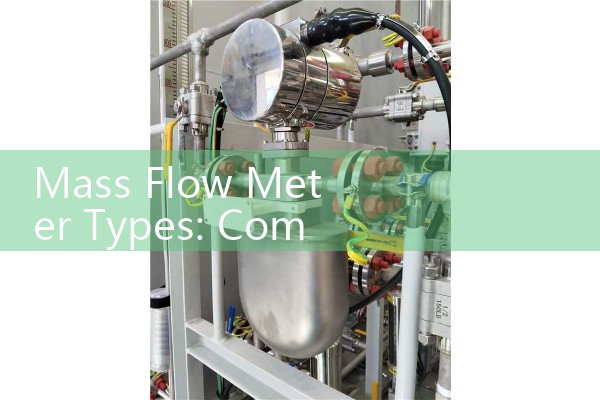
Capillary systems work with clean, filtered gases only. The sensor bypass tube is often less than 1 mm ID. Any particle will plug it. We use a 2µm inlet filter as standard. Most customers order a DN4 or 1/8 inch compression fitting and supply inlet pressure between 0.2 and 10 bar. Because of the small wetted parts, the response time is fast, under 300 ms. This is ideal for PID gas blending loops.
Head-to-Head Comparison in the Field
Here is the thing. Coriolis meters are the first choice for liquids regardless of viscosity. For gases above DN50 and dry, thermal insertion meters win on price. For gases below 5 kg/h, capillary is the only option that gives stable repeatability. We have seen this on customer sites many times. An oil terminal in Nigeria runs Coriolis on diesel and jet fuel lines. The same company uses thermal mass meters on flare gas headers and capillary units in the lab for calorific value test rigs. That combination covers all three needs.
Accuracy wise, Coriolis reaches 0.1% of rate. Thermal mass tops out around 1% of reading on site once you factor in installation effects. Capillary meters hit 0.5% of rate under lab conditions. Temperature sensitivity is another point. Thermal mass readings drift if the gas composition changes. Coriolis does not care what the fluid is. Capillary meters need single-gas calibration. Send us your gas mix percentage and molecular weight before ordering.
How to Get a Quote and Recommended Models
We stock and support three main series. The SICM series is a cost-optimised Coriolis mass flow meter for general liquids, DN15 to DN50. The SITM series handles thermal mass measurement for compressed air and biogas, available in inline and insertion probes. The SICAP series is our capillary mass flow range for research and gas analysis. We ship from our centre in China to Australia, UAE, Chile, and dozens of other countries.
Send us your pressure (bar), temperature (°C), pipe size (DN), and flow range for a fixed price within one working day. Email: [email protected]. Tel: +86-135-1213-1526. Whatsapp: 86-135-12131526. WeChat: +86 13512131526. See our website at flow-meter.com.au and flow-meter.com.au for data sheets.
FAQ
1. Which mass flow meter works best for high-viscosity fluids?
Coriolis mass flow meters handle viscosities beyond 1000 cP with no loss in accuracy. Thermal and capillary meters are not suitable for liquids.
2. Can a thermal mass flow meter measure liquid flow?
No, thermal mass meters are designed for clean gas only. Liquid contact damages the sensors and voids the calibration.
3. What is the typical price difference between Coriolis and thermal mass for a DN50 gas line?
A DN50 thermal mass inline meter costs about 40 to 50 percent less than an equivalent Coriolis for dry, low-pressure gas. The cost gap narrows for high-pressure or wet gas where Coriolis is the safer bet.
4. How do I choose between a capillary meter and a standard thermal mass meter for low gas flow?
If your flow is below 3 kg/h or you need response below 400 ms, choose capillary. Above 5 kg/h with a pipe size larger than DN15, select a standard thermal mass meter.
5. What certifications do Silver Automation Instruments mass flow meters carry?
Our meters come with ATEX, IECEx, and CE declarations where applicable. We provide calibration certificates traceable to international standards with every shipment. Specify your hazardous area zone when you request a quote.