

 Current position >About Us
Flow Meter Fuel Sizing: Positive Displacement and Turbine Sensors for Diesel Transfers
Quick Answer: For diesel transfer skids and tank truck loading, size the meter by minimum flow, maximum flow, viscosity, pipe size, and back pressure. Positive displacement meters fit high viscosity and low flow better than turbine sensors. Turbine sensors can work when diesel is clean, temperature is stable, and straight pipe is enough.
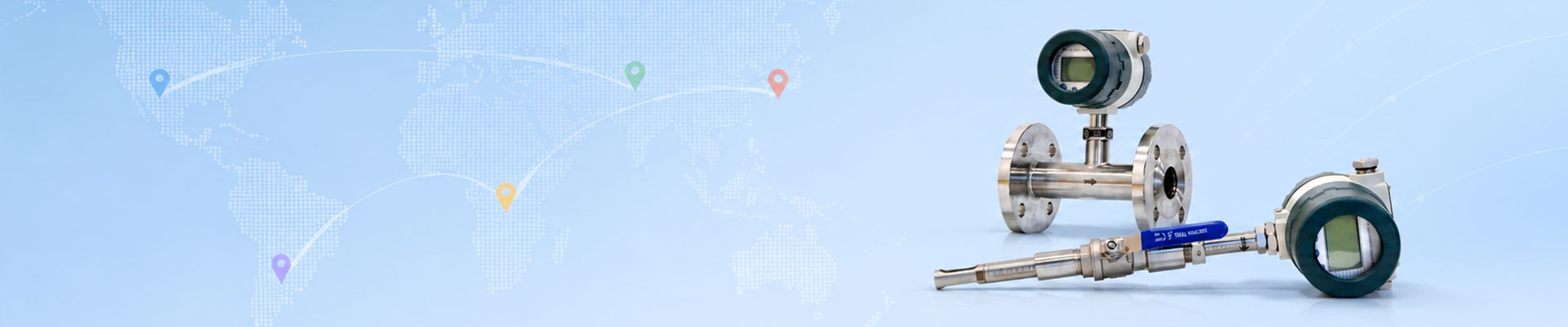
Diesel transfer flow meter sizing means matching the sensor to the actual batch, not the pipe label. A meter that works on a 50 mm line in Malaysia may fail on a 25 mm day tank line in Chile. Silver Automation Instruments supplies both positive displacement and turbine sensors for diesel. We sell to engineering contractors, panel builders, and distributors in Southeast Asia, Oceania, Latin America, Africa, and the Middle East.
Positive Displacement Meters for Diesel Transfers
Positive displacement meters, including oval gear flow meters for diesel, measure volume by filling and emptying fixed chambers. A positive displacement flow meter for diesel keeps accuracy when flow is from 1 L/min to 400 L/min on a DN25 or DN40 body. Diesel viscosity changes with temperature, and these meters still hold their repeatability.
In practice, most engineers choose a positive displacement meter for truck offloading, day tank fill, generator fuel monitoring, or batch blending. The meter handles pulsing flow from a gear pump. It does not need a long straight run. Accuracy can be plus or minus 0.5 percent of reading on diesel from 2 cP to 80 cP.
We have seen this on customer sites many times. A diesel distribution company in Vietnam used a turbine sensor on a small generator refill line. At low flow the rotor stopped. We replaced it with an oval gear flow meter with a built-in pulse output. The flow range was 2 to 80 L/min. The batch error dropped below 0.5 percent.
Positive displacement meters have a higher pressure drop than turbine sensors. You must check the pump head and downstream valve. On a 40 mm line with diesel at 5 cP, a PD meter may add 0.2 to 0.8 bar of pressure loss depending on flow and model.
Turbine Sensors for Diesel: Where They Work
A turbine flow sensor for diesel measures flow by rotor speed. It works best on clean fuel, larger lines, and steady flow above the minimum linear range. For diesel transfers, turbine sensors are common on DN50 to DN100 loading arms where flow is 150 to 1200 L/min.
Because the rotor has moving parts in the flow stream, solid particles and air bubbles cause error. Diesel may contain small particles from storage tanks. A strainer or filter is needed. The meter also needs straight pipe. A typical rule is 10 pipe diameters upstream and 5 pipe diameters downstream.
Turbine sensors cost less per unit at larger pipe sizes. They also have lower pressure drop. A DN50 turbine sensor from the TF series may lose less than 0.1 bar at 400 L/min. This matters on gravity-fed diesel transfer from elevated tanks.
One common mistake is using a turbine sensor below the minimum flow. For example, a DN50 turbine sensor may have a minimum linear flow of 60 L/min. If the pump runs at 30 L/min during topping, the rotor may turn but the K-factor shifts. The totalizer then reads high or low. Positive displacement meters do not have this problem at low flow.
Flow Meter Fuel Sizing Steps
Start with flow range. Ask for the minimum flow, normal flow, and maximum flow in L/min or m3/h. Do not size only by pipe diameter. A DN50 pipe does not mean a DN50 meter is correct.
Next check diesel viscosity and temperature. Diesel at 20 °C may be 3 to 6 cP. At 5 °C it can be higher. Some biodiesel blends go above 10 cP. Positive displacement meters usually handle this range. Turbine sensors need stable viscosity or correction.
Then check back pressure. Diesel can cavitate o