

 Current position > Product detail
『Inline Co2 Flow Meter: Sizing Thermal Mass Transmitters for Beverage Carbonation Piping Loops』Related information(v cone flow meter|rotary gas meter|gallon meter|gear meter|metal tube rotameter|glass tube rotameter|nutating disk meter|transit time ultrasonic flow meter|wedge flow meter|pd meters|hydraulic flow meter|ultrasonic water flow meter|water flow meter|air flow meter|magnetic water flow meter|oxygen flow meter|gas flow meter|argon flow meter|air velocity meter|gasoline flow meter|fuel flow meter|ultrasonic water meter|digital water meter|nitrogen flow meter|solid flow meter|Oxygen tank flow meter|digital water flow meter|diesel fuel flow meter|steam flow meter|02 flow meter|compressed air flow meter|oil flow meter|liquid flow meter)

Inline CO2 Flow Meter Sizing for Beverage Carbonation Piping Loops
Quick Answer: For beverage carbonation loops, an inline thermal mass CO2 flow meter is normally sized from DN8 to DN50 with a flow range from 0.5 kg/h to 100 kg/h. We recommend a 316L inline meter with 4-20 mA HART or Modbus RTU. Send Silver Automation Instruments your CO2 pressure, temperature, pipe size, and flow range to get a firm quote.
Why Thermal Mass Meters Work for CO2 Injection
Carbonation skids inject CO2 into beer, soft drinks, water, and other beverages at pressures from 2 bar to 8 bar. A thermal mass transmitter measures gas mass flow directly. It does not need a separate pressure or temperature compensation loop. The sensor uses two PT100 elements. One element is heated and the other measures gas temperature. The cooling effect of passing CO2 changes the temperature difference. The electronics convert this into kg/h, Nm3/h, or SLPM.
We have seen a brewery in Vietnam replace a glass tube rotameter with an inline thermal mass meter on a 6 bar CO2 line. The plant wanted a 4-20 mA signal to the PLC. Carbonation level stayed more stable across shifts after the change.
Sizing Parameters That Matter
In practice, pipe size alone is not enough for gas flow. You need the normal, minimum, and maximum CO2 flow rate in kg/h or Nm3/h. You also need line pressure and gas temperature. For beverage loops the typical values are 2 bar to 8 bar and 0°C to 40°C. Flow range often falls between 1 kg/h and 60 kg/h on small carbonation skids.
Silver Automation Instruments sizes the thermal mass transmitter for actual gas density and velocity. If the meter is sized too large, low flow readings become unstable. If it is sized too small, the sensor can overheat or reach full scale too early. A good target is maximum flow at 70 to 80 percent of the meter full scale.
Recommended Inline Configuration
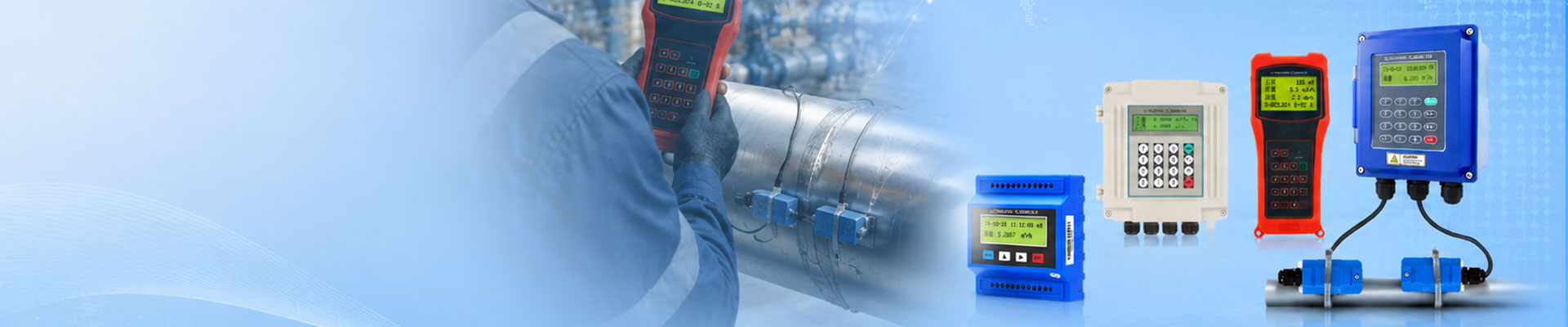
For a DN15 carbonation line, we normally recommend the Silver Instruments TFM series inline thermal mass flow meter with Tri-clamp or NPT ends, a 316L stainless steel body, FKM seals, and no moving parts. The electronics support 4-20 mA HART, Modbus RTU, and an optional pulse output. The local display shows flow in kg/h, Nm3/h, or SLPM. Accuracy is around plus or minus 1.0 percent of full scale for clean CO2 gas.
Specification example for a beer carbonation loop: DN15 Tri-clamp connection, flow range 0.5 to 25 kg/h CO2, pressure 6 bar, temperature 5°C to 25°C, output 4-20 mA HART, power 24 V DC. This setup gives the PLC a continuous signal for flow-based CO2 dosing.
Installation Rules for Beverage Lines
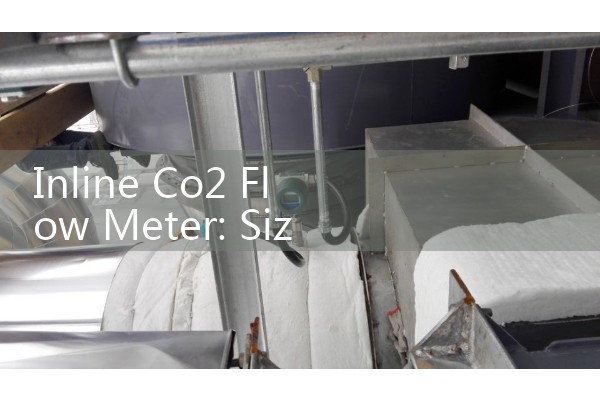
Install the meter in a straight pipe section. Upstream straight run of 10 pipe diameters and downstream straight run of 5 pipe diameters are enough for thermal mass meters in most gas lines. Avoid installing directly after a pressure regulator or a solenoid valve. The flow profile can be disturbed. Use a filter upstream if the CO2 line may carry particles. Food grade CO2 is normally clean, but older plants can have rust or scale in carbon steel pipes.
Vertical installation works if the CO2 flow direction is upward. Downward vertical gas flow should be avoided because the sensor calibration can shift. Horizontal installation is the safest default. A customer in Thailand asked about a vertical installation. We specified upward flow and the meter performed well.
Pressure Drop and Response Time
Inline thermal mass meters have low pressure drop compared to orifice plates. In a 6 bar CO2 lo
Common Sizing Mistakes
One mistake is selecting a meter designed for compressed air and expecting the same range for CO2. CO2 has a higher density than air at the same pressure and temperature. The thermal cooling effect is different. Silver Automation Instruments calibrates the sensor for CO2 or applies a gas correction factor. Always state that the gas is CO2 with 99.5 percent purity or higher.
Another mistake is ignoring pipeline pressure when quoting an Nm3/h flow range. Normal cubic meters per hour depends on pressure and temperature. If the CO2 line runs at 6 bar, the actual cubic meters per hour is much lower than the normal cubic meters per hour. A thermal meter can display both, but the PLC should use mass flow in kg/h for carbonation ratio control.
Materials and Compliance
Use a meter with 316L wetted parts and FKM or EPDM seals. For beverage plants a clean design with limited internal cavities is easier to flush. Some thermal mass meters are not suitable for liquid. If the CO2 line can carry moisture or liquid carryover, install a moisture separator upstream. The sensor can handle short gas temperature swings from -20°C to 60°C, but the specified accuracy is best between 0°C and 50°C.
For hazardous area installations, Silver Automation Instruments can supply an ATEX Zone 1 version. Most beverage plants do not need ATEX for CO2, but some CO2 storage and recovery areas may. Tell us the zone classification before ordering.
FAQ: Inline CO2 Flow Meter Sizing
What pipe sizes suit a thermal mass CO2 flow meter for beverage carbonation?
Most inline meters fit DN8, DN15, DN20, DN25, DN40, or DN50. For small craft beverage lines DN15 is the most common. For larger carbonation loops DN25 to DN40 gives a better turndown.
Do I need pressure and temperature compensation for CO2 measurement?
No. A thermal mass transmitter measures mass flow directly. You do not need a separate pressure transmitter or temperature transmitter for density correction. You still need to know the operating pressure and temperature when sizing the meter range.
Can the flow meter work with a CO2 mass flow controller?
Yes. The meter can output 4-20 mA HART or Modbus RTU to a PLC. The PLC controls a mass flow controller or a proportional valve. Silver Automation Instruments can also supply the flow meter as part of a dosing loop with a control valve.
What is the typical flow range for a carbonation skid?
Small carbonation skids normally run from 1 kg/h to 40 kg/h. Large soft drink lines can run from 20 kg/h to 200 kg/h. If you send us the product line capacity in liters per hour and the target carbonation volume, we can convert it to a CO2 mass flow range.
How is the meter calibrated for CO2?
Silver Automation Instruments calibrates the thermal sensor using the gas type, pressure, and temperature range you provide. If your CO2 purity is 99.9 percent, the calibration is straightforward. If the gas is a mix of CO2 and nitrogen, tell us the ratio.
For quotes, send us your CO2 pressure in bar, temperature in °C, pipe size in DN, and flow range in kg/h or Nm3/h. Contact Silver Automation Instruments at Tel: +86-135-1213-1526, WhatsApp: 86-135-12131526, WeChat: +86 13512131526.