

 Current position > Product detail
『Intrinsically Safe Volumetric Flow Meter: ATEX Enclosure Sizing Rules for Explosive Fuel Vapor Loops』Related information(v cone flow meter|rotary gas meter|gallon meter|gear meter|metal tube rotameter|glass tube rotameter|nutating disk meter|transit time ultrasonic flow meter|wedge flow meter|pd meters|hydraulic flow meter|ultrasonic water flow meter|water flow meter|air flow meter|magnetic water flow meter|oxygen flow meter|gas flow meter|argon flow meter|air velocity meter|gasoline flow meter|fuel flow meter|ultrasonic water meter|digital water meter|nitrogen flow meter|solid flow meter|Oxygen tank flow meter|digital water flow meter|diesel fuel flow meter|steam flow meter|02 flow meter|compressed air flow meter|oil flow meter|liquid flow meter)

Intrinsically Safe Volumetric Flow Meter: ATEX Enclosure Sizing Rules for Explosive Fuel Vapor Loops
Quick Answer: The correct ATEX enclosure size for an intrinsically safe volumetric flow meter in a fuel vapor loop depends on gas group, temperature class, loop energy, and cable length. For Zone 1 diesel or gasoline vapor loops, an Ex ia oval gear meter with an Ex e terminal box usually works. Send fuel type, pressure in bar, temperature in °C, pipe size DN, and flow range to get a specific enclosure drawing.
Why fuel vapor loops need careful ATEX sizing
Fuel vapor loops appear on oil and gas skids, marine fuel transfer lines, and solvent recovery units. Diesel, gasoline, jet fuel, and light naphtha can form flammable vapors. A leaking seal or an open drain path can push vapor into the transmitter housing. That is why ATEX Zone 1 or Zone 2 classification matters.
Volumetric flow meters like oval gear and positive displacement types are common for fuel because they measure small flows with repeatable accuracy. But the meter body is mechanical. The electronic transmitter needs protection. If you install a flow meter in a fuel vapor loop without an ATEX certified enclosure, you risk ignition from hot surfaces or electrical sparks.
Most engineers skip this part. They focus on the meter accuracy and forget that enclosure temperature rise can exceed the gas temperature class. We have seen this on customer sites many times in Southeast Asia and the Middle East.
What intrinsic safety means for a volumetric flow meter
Intrinsic safety limits electrical energy. An Ex ia barrier in the safe area restricts voltage and current to the flow meter. The meter electronics store very low energy. This prevents ignition even if a fault occurs. But intrinsic safety does not remove the need for an ATEX rated enclosure. The enclosure still protects the wiring from mechanical damage and weather.
Here is the thing. For Zone 1 fuel vapor loops with Group IIB gases, Ex ia circuits can use an Ex e enclosure. The Ex e enclosure is often smaller than an Ex d flameproof enclosure. That helps when a fuel skid has limited panel space. A smaller enclosure also reduces overall weight on small DN15 and DN20 pipe runs.
But the enclosure size is not random. You must check the entity parameters: Ui, Ii, Pi, Ci, and Li. The barrier and cable must stay within these limits. Cable capacitance and inductance increase with cable length. In practice, long cable runs inside a fuel skid can eat up the safety margin fast.
ATEX enclosure sizing rules you should follow
Rule number one: confirm the fuel vapor group and autoignition temperature. Gasoline vapor is usually IIA and T3. Diesel vapor can be IIA and T3 when heated. But always use T4 if the process runs above 80 °C. A T4 surface temperature limit is 135 °C. Your enclosure surface must stay below that number.
Rule number two: add space for cable glands. A 150 mm x 150 mm x 100 mm enclosure looks fine on a drawing. Then you add two glands and the internal bend radius eats 40 to 60 mm. The technician cannot close the lid. We have heard this complaint from a marine fuel system installer in Vietnam last year.
Rule number three: keep at least 20 percent spare volume. Future wiring changes happen often on fuel skids. Extra room inside the enclosure also improves heat dissipation. Overcrowded enclosures run hotter and can push a T3 enclosure close to a T4 limit.
Rule number four: separate the display from hot process lines. A DN40 fuel oil line at 180 °C radiates heat. A standoff bracket or an extension tube helps keep the enclosure surface cool. If the transmitter display sits directly on the meter body, the display electronics absorb heat. That shortens the life of the LCD
Recommended volumetric flow meter for fuel vapor loops
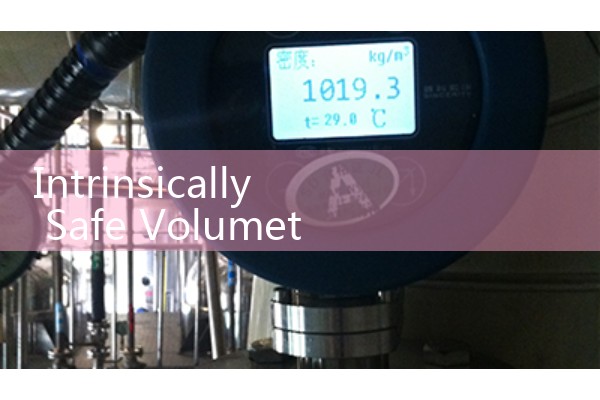
Silver Instruments supplies oval gear volumetric flow meters with Ex ia IIC T4 or Ex d IIB T4 approval options. The standard transmitter outputs 4-20 mA HART with optional pulse output. Meter sizes start at DN15 for low flow fuel consumption and go up to DN50 for transfer lines. For diesel at 40 °C, a DN25 oval gear meter handles typical engine fuel return line flow ranges from 20 to 200 liters per hour depending on viscosity.
If you need a compact solution, choose the Ex ia version with a small Ex e junction box. The junction box can be 150 mm x 150 mm x 100 mm plastic or aluminum. If you need local totalization, select a display version. That will require a deeper enclosure, about 120 mm minimum. For DN25 and larger, the added weight is small and pipe support is still simple.
Silver Automation Instruments supplies ATEX certificates with each meter. We list the certificate number and temperature class on the nameplate. This helps your EPC or end user pass the local inspection without field questions.
Common mistakes engineers make
One mistake is using a non ATEX general purpose enclosure with an Ex ia barrier. The barrier limits energy but the enclosure still needs impact resistance and UV protection. A plastic box from an electrical supplier will not pass an ATEX audit in a fuel terminal.
Another mistake is ignoring the T-rating of the entire loop. The enclosure surface can get hot from the meter body if there is no thermal isolation. For a 180 °C heavy fuel oil loop, specify a high temperature extension between the flow meter and the electronics.
Then there is cable length. A barrier may allow 1000 meters of cable. But the declared Co and Lo may only support 200 meters with a specific cable type. Longer runs require lower capacitance cable or a different barrier. We had a customer in a desalination plant ask about a similar issue, except their loop involved seawater flow meter wiring. The same entity rule applies.
FAQ: ATEX enclosure sizing for volumetric flow meters
Can I install an intrinsically safe volumetric flow meter without an ATEX enclosure?
No. Intrinsic safety reduces electrical energy, but the electronic terminals still need an ATEX certified enclosure with proper IP rating. The enclosure provides mechanical protection and thermal isolation.
What enclosure size do I need for a DN25 fuel vapor loop?
Start with 150 mm x 150 mm x 100 mm for wiring only. If the transmitter has a local display, use at least 150 mm x 200 mm x 120 mm. This gives room for cable glands and spare wiring.
Does an Ex ia meter need an Ex d enclosure?
Not always. In Zone 1, an Ex ia circuit can be installed inside an Ex e enclosure with increased safety. This is often smaller and lighter than Ex d. For Zone 2, an Ex nA enclosure may be enough.
How do I check the temperature class of the enclosure?
Compare the fuel vapor autoignition temperature with the enclosure surface temperature. Use T4 for gasoline. Keep the surface below 135 °C. Add thermal isolation if the process line exceeds 80 °C.
What details do I send to Silver Instruments for a quote?
Send fuel type, pressure in bar, temperature in °C, pipe size DN, and flow range. Also tell us if you need local display, pulse output, or HART communication. We will send a specific model and enclosure drawing.
Send us your fuel type, pressure (bar), temperature (°C), pipe size (DN), and flow range. Contact Silver Automation Instruments at Tel +86-135-1213-1526, Whatsapp 86-135-12131526, WeChat +86 13512131526.